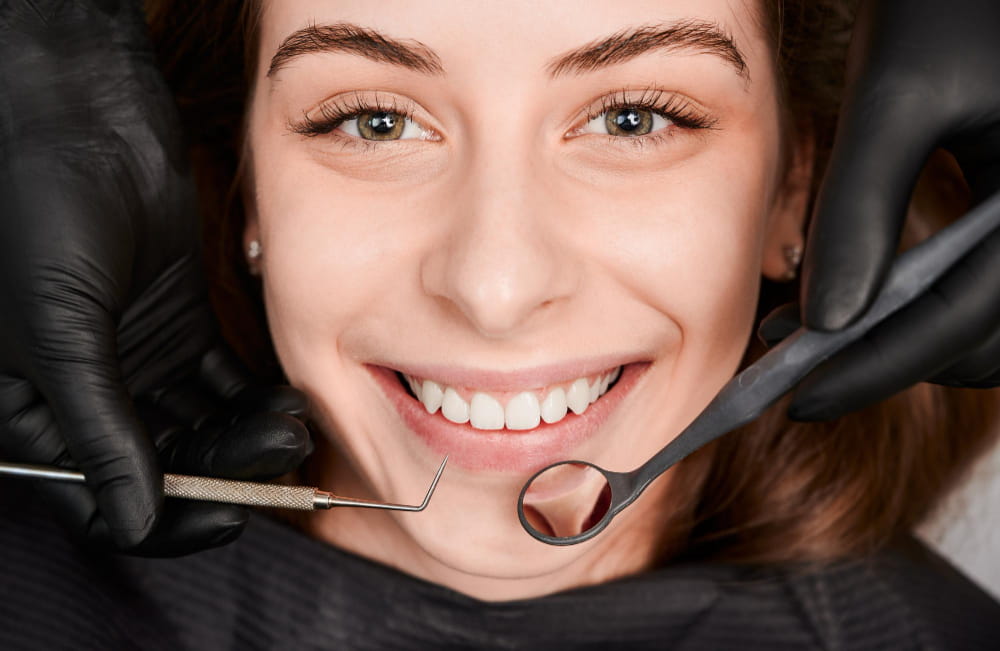
A smile makeover in Antalya is a personalised dental treatment plan designed to improve the colour, shape, alignment, size, and overall harmony of the teeth. It is not a single procedure. It is a tailored combination of cosmetic and restorative dentistry treatments planned according to your facial features, gum line, bite, tooth structure, and expectations. For some patients, a smile makeover may involve only teeth whitening and composite bonding. For others, it may require porcelain veneers, zirconium crowns, gum contouring, implant treatment, orthodontics, or replacement of old restorations.
When we plan a smile makeover, we do not only look at the teeth. The lips, face shape, skin tone, smile width, tooth visibility during speech, gum display, and bite relationship all matter. A smile that looks beautiful in a photo but feels uncomfortable when chewing is not a successful result. The aim is to create a smile that looks natural, functions well, and suits the person’s face rather than copying the same tooth shape for everyone.
Antalya is a popular destination for smile makeover treatments because patients can access digital smile design, modern dental materials, experienced cosmetic dentists, and more accessible treatment prices compared with many European countries. Many international patients travel here for treatments such as veneers, crowns, whitening, gum reshaping, and implant-supported restorations. A well-planned smile makeover can often be completed within a few days to two weeks, depending on the procedures needed.
A good smile makeover should feel like an upgrade, not a mask. The teeth should not look bulky, too white, too long, or disconnected from the face. This is where detailed planning makes the difference.
What Is a Smile Makeover?
A smile makeover is a customised dental treatment plan that improves the appearance and function of the smile by correcting issues such as tooth discolouration, gaps, worn edges, uneven tooth shapes, crowding, old fillings, missing teeth, gum asymmetry, and bite-related problems. It can be simple or complex depending on the patient’s needs. In clinical practice, no two smile makeover cases are truly the same because tooth structure, facial proportions, gum health, and expectations vary from person to person.
The treatment usually begins with a detailed dental examination. We check the teeth, gums, bite, jaw movement, existing restorations, enamel thickness, tooth colour, and smile line. Photographs, digital scans, and X-rays may be taken to understand both the aesthetic and functional details. If the gums are inflamed or there is decay under an old filling, these problems must be treated before cosmetic work begins. A beautiful smile cannot sit on an unhealthy foundation.
A smile makeover may include porcelain veneers for visible front teeth, zirconium crowns for damaged or heavily restored teeth, whitening for natural teeth, bonding for small chips, gum contouring for uneven gum levels, and implants or bridges for missing teeth. Some patients need only 6 to 8 visible upper teeth treated, while others may need 20 or more teeth restored to create balanced upper and lower arches.
The goal is not to create the brightest possible teeth. The goal is to design a smile that fits the patient. For example, a very square tooth shape may suit one face, while a softer rounded edge may look more natural on another. Shade selection works the same way. Many patients ask for very white teeth, but the final shade should still look clean, elegant, and believable under natural daylight.
What Treatments Are Included in a Smile Makeover?
A smile makeover can include several dental treatments, and the right combination depends on what needs to be corrected. Some patients mainly want whiter teeth. Some have chipped, short, or worn teeth. Others need a full aesthetic and functional rehabilitation because old crowns, missing teeth, gum recession, or bite problems affect the smile. The treatment list is chosen after examination, not guessed from photos alone.
Porcelain veneers are commonly used when the front teeth have minor shape problems, gaps, stains, or small alignment concerns. Veneers are thin ceramic shells bonded to the visible surface of the teeth. In many cases, the preparation is around 0.3 to 0.7 mm, depending on tooth position and material choice. If teeth are already pushed forward, more careful planning is needed to avoid bulky results.
Zirconium crowns may be preferred for teeth that are heavily filled, cracked, root canal treated, severely discoloured, or structurally weak. A crown covers the tooth more fully than a veneer, so it is used when protection and strength are needed. Teeth whitening can be included before veneers or bonding if natural teeth will remain visible. Whitening results vary, but many patients achieve a 2 to 6 shade improvement depending on enamel structure and stain type.
Composite bonding can repair small chips, reshape edges, or close minor gaps in a conservative way. Gum contouring may be used when the gum line is uneven or too much gum shows while smiling. Missing teeth may require implants, bridges, or implant-supported crowns. Orthodontic treatment may be recommended if tooth position is too irregular for a healthy cosmetic result. A proper smile makeover is not about doing every treatment available; it is about choosing only what the mouth actually needs.
Who Is a Good Candidate for a Smile Makeover?
A good candidate for a smile makeover is someone who is unhappy with the appearance of their smile and wants a planned, long-lasting improvement rather than a quick temporary change. Common concerns include yellow or stained teeth, gaps, chipped edges, worn teeth, short teeth, uneven gum levels, old crowns, visible metal margins, missing teeth, crowding, or a smile that looks aged. Many patients tell us they avoid smiling in photos or cover their mouth when laughing. That kind of discomfort is often what brings them to treatment.
Healthy gums are very important. If there is bleeding, swelling, gum disease, or active infection, cosmetic dentistry should wait until the mouth is stable. Veneers or crowns placed over inflamed gums can lead to bleeding, poor margins, bad breath, and early failure. Before planning aesthetics, we check gum pockets, plaque levels, bone support, and existing restorations. If needed, professional cleaning, periodontal care, fillings, or root canal treatment may be completed before cosmetic work.
Patients with enough enamel may be good candidates for veneers. Patients with damaged or heavily restored teeth may be better suited to crowns. Those with missing teeth may need implants or bridges as part of the smile makeover. People who grind their teeth at night can still have treatment, but the design must account for stronger bite forces. In these cases, a night guard is often recommended after treatment to protect ceramics from fractures or chipping.
Good candidates also have realistic expectations. A smile makeover can make a major difference, but it must respect biology. If a patient wants extremely white, perfectly straight, identical teeth, we discuss whether that look will suit their face and whether it can be achieved without over-preparing the natural teeth. The safest and most attractive result usually comes from balancing the patient’s wishes with what the teeth and gums can support.
Smile Makeover Before and After Results
Smile makeover before and after results can be dramatic, but the best outcomes are not always the ones that look the most artificial. A successful smile makeover should improve colour, symmetry, tooth shape, gum balance, and facial harmony while still looking like it belongs to the person. When patients compare their before and after photos, they often notice more than whiter teeth. The smile may look wider, the lips may appear better supported, and the face may seem fresher because the teeth restore lost vertical dimension or correct worn edges.
Before treatment, we usually document the case with photos from different angles: full face, relaxed smile, wide smile, side profile, close-up teeth, and bite views. These records help us plan tooth length, midline position, gum levels, smile curve, and shade. A small 1 mm change in the length of the front teeth can noticeably affect the smile. The same applies to gum symmetry. If one central incisor looks shorter because the gum sits lower, simply making the ceramic longer may not solve the visual imbalance.
After treatment, patients can expect improvements based on the procedures performed. Whitening may brighten natural teeth by several shades. Veneers can correct shape, minor gaps, surface stains, and slight asymmetry. Crowns can rebuild heavily damaged teeth and improve both strength and appearance. Gum contouring can make the teeth look more even if the gum line is irregular. Implants or bridges can restore missing areas so the smile does not collapse visually.
Realistic before and after assessment should include function as well as appearance. The teeth should meet comfortably, speech should feel natural after adaptation, and the patient should be able to clean around the restorations. A beautiful photo is nice. A smile that feels good every morning matters more.
Smile Makeover Process Step by Step
The smile makeover process begins with a detailed consultation. We listen to what the patient dislikes about their smile and what kind of result they want. Some patients bring reference photos, which can be helpful, but we always adapt the idea to their own face. During the examination, we check tooth condition, gum health, bite, jaw movement, existing crowns or fillings, missing teeth, and signs of grinding. Digital photographs, X-rays, and intraoral scans may be taken to build a clear treatment plan.
After diagnosis, we discuss the treatment options. If the teeth are healthy but stained, whitening and bonding may be enough. If the front teeth have shape issues or deep discolouration, porcelain veneers may be planned. If teeth are damaged, root canal treated, or heavily filled, zirconium crowns may be safer. If the gum line is uneven, laser or surgical gum contouring may be added. Missing teeth may require implant planning before the final smile design is completed.
In many cosmetic cases, a digital smile design or wax-up is prepared. This gives the patient and dentist a preview of tooth shape, length, and smile balance. A mock-up may be placed in the mouth using temporary material, allowing the patient to see the approximate design before final work begins. This stage is valuable because it reduces surprises. If the teeth look too long, too square, or too dominant, adjustments can be made before ceramics are produced.
Tooth preparation is then completed when needed. Impressions or digital scans are sent to the dental laboratory. Temporary teeth may be fitted while the final veneers or crowns are made. At the final appointment, the restorations are checked for fit, shade, shape, bite, and gum adaptation before bonding or cementation. Small bite adjustments are normal. The final smile should feel comfortable, not just look polished.
How Long Does a Smile Makeover Take?
The time needed for a smile makeover depends on the treatments included. A simple makeover with teeth whitening and composite bonding may be completed in 1 to 3 appointments. A veneer or crown-based smile makeover in Antalya often takes around 5 to 7 days when the gums are healthy and no surgical treatment is needed. More complex cases involving implants, gum treatment, orthodontics, or bone grafting may take several months because healing and tooth movement cannot be rushed safely.
For international patients, timing is usually planned carefully before arrival. During the first visit, we perform consultation, scans, photographs, shade selection, tooth preparation if needed, and temporary restorations. The dental laboratory then prepares the final veneers or crowns. Try-in appointments may be scheduled to check the shape, colour, and fit before final bonding. A patient receiving 16 to 20 veneers or crowns may need more appointments than someone treating only 6 upper front teeth.
If implants are part of the smile makeover, the timeline changes. Implant placement usually requires a healing period of around 3 to 6 months before final crowns are fitted, depending on bone quality and whether grafting is needed. Temporary teeth may be used during this period so the patient does not remain without teeth. Gum contouring may need a short healing period before final impressions, usually around 1 to 3 weeks depending on the amount of reshaping.
Patients sometimes ask for everything to be finished in one or two days. That may be possible for limited bonding or whitening, but not for a high-quality ceramic smile makeover. Good ceramics require accurate scans, laboratory design, proper fit checks, bite adjustment, and patient approval. A smile makeover should be fast enough to be convenient, but not so rushed that the result feels uncomfortable or unnatural.
Smile Makeover Cost in Antalya
Smile makeover cost in Antalya varies according to the number of teeth treated, the procedures included, the material selected, the complexity of the bite, and whether additional treatments such as gum contouring, implants, root canal treatment, fillings, or extractions are needed. A patient who needs 8 porcelain veneers will have a very different cost from someone who needs 20 zirconium crowns, implant-supported restorations, and gum treatment.
The main cost factors are usually the type and number of restorations. Composite bonding is generally more affordable than porcelain veneers, but it may stain or chip more easily over time. Porcelain veneers usually cost more because they require laboratory production, ceramic artistry, adhesive bonding, and detailed planning. Zirconium crowns may be used when teeth need more structural support. Implant treatment adds cost because it includes surgical placement, implant components, abutments, and final crowns.
A clear smile makeover quotation should explain exactly what is included. Patients should know whether the price covers consultation, X-rays or 3D imaging if needed, temporary teeth, laboratory work, final restorations, bite adjustments, aftercare appointments, and any extra dental treatments. If a quote looks unusually low, it is worth asking which material will be used, how many teeth are included, whether temporaries are provided, and whether gum or bite corrections are extra.
Antalya is often more affordable than the UK, Germany, France, the Netherlands, or Scandinavian countries because clinical and laboratory operating costs in Turkey are different. Lower cost should not mean lower planning quality. A smile makeover is visible every day when you speak, laugh, and eat. The right question is not only “How much is it?” but “What exactly am I receiving, and is it suitable for my teeth?”
Why Choose Antalya for a Smile Makeover?
Antalya is chosen for smile makeover treatments because it offers experienced cosmetic dental teams, digital dentistry technology, high-quality laboratory work, and treatment costs that are often more accessible than in many European countries. For patients travelling from abroad, the city also has a strong tourism infrastructure, an international airport, and accommodation options close to dental clinics. These practical details make treatment planning easier, especially when several appointments are needed within a short period.
From a clinical perspective, the strength of Antalya lies in clinics that combine digital planning with personalised dentistry. A smile makeover should include proper photographs, scans, X-rays when needed, shade analysis, bite evaluation, and discussion of tooth shape before treatment begins. Digital smile design can help patients visualise the planned result. Intraoral scanners can improve comfort and accuracy compared with traditional impression materials in suitable cases. CAD/CAM-supported laboratories can produce veneers, crowns, and temporary restorations with high precision.
Many international patients choose Antalya because they can receive treatments such as veneers, zirconium crowns, whitening, implants, and gum contouring in a coordinated plan. Instead of visiting several providers at different times, the process can be organised around one treatment schedule. This is useful for patients with limited travel time, but it still requires responsible planning. Not every case should be completed quickly. If gum disease, infection, or implant healing is involved, the timeline must respect biology.
The city itself can make the experience less stressful. Patients can recover in a comfortable environment, attend scheduled appointments, and avoid the rushed feeling they may have in their home country due to long waiting lists or higher private treatment costs. The real value comes from combining comfort with clinical discipline. A smile makeover in Antalya should be designed with the same seriousness as any advanced dental treatment.
Recovery and Aftercare After a Smile Makeover
Recovery after a smile makeover depends on which treatments were performed. Teeth whitening may cause temporary sensitivity for 24 to 72 hours. Composite bonding usually requires little to no recovery time, though patients should avoid staining foods and drinks such as coffee, red wine, curry, and dark sauces for the first 24 to 48 hours. Veneers and crowns may cause mild gum tenderness or tooth sensitivity for a few days, especially if tooth preparation was needed.
After ceramic restorations are fitted, the bite may feel slightly different. This is normal because the teeth may have a new shape, length, or contact pattern. The tongue notices changes very quickly, even when the adjustment is less than 1 mm. If a high spot causes discomfort while chewing, it should be adjusted by the dentist. Patients should not wait for weeks hoping it will disappear if they feel sharp pressure on one tooth.
Good aftercare protects the result. Veneers, crowns, and bonding do not mean the mouth becomes maintenance-free. Daily brushing, flossing, and cleaning around the gum line are essential. Patients with bridges or implant restorations may need interdental brushes, super floss, or a water flosser. Professional dental cleaning is usually recommended every 6 months, though patients with gum disease history may need shorter intervals.
Hard habits can damage even strong dental materials. Biting fingernails, chewing ice, opening packages with teeth, cracking nuts, or holding pins between teeth can chip ceramics or bonding. Patients who grind or clench at night should use a custom night guard. This is a small device compared with the cost of repairing fractured restorations.
Food and drink habits also matter. Natural teeth can stain, and composite bonding is more stain-prone than porcelain. Ceramic veneers and zirconium crowns resist staining well, but the margins and surrounding teeth still need care. A smile makeover can stay beautiful for many years when the patient treats it like a long-term investment rather than a one-time cosmetic procedure.
Smile Makeover and Hollywood Smile
A smile makeover and a Hollywood Smile are closely related, but they are not exactly the same concept. A smile makeover is a personalised treatment plan designed around the patient’s dental health, facial features, bite, gum line, and aesthetic goals. A Hollywood Smile usually refers to a brighter, more symmetrical, camera-ready smile, often created with veneers or crowns. The Hollywood Smile look is typically associated with white teeth, even edges, balanced proportions, and a polished appearance.
In practice, many Hollywood Smile cases are planned as part of a smile makeover. The difference is in the design goal. A patient asking for a natural smile makeover may prefer softer tooth edges, a slightly warmer shade, and subtle character in the ceramics. A patient asking for a Hollywood Smile may want a brighter shade, stronger symmetry, and a more noticeable transformation. Both can be done beautifully when the design matches the face and does not ignore oral health.
The risk with an overdone Hollywood Smile is that the teeth may look too white, too flat, too bulky, or too similar from one patient to another. Teeth should have depth, texture, and proportion. Even very white teeth can look elegant if the shape, translucency, gum line, and smile curve are designed correctly. The problem is not brightness itself; the problem is poor planning.
A smile makeover gives us a broader and more flexible approach. We may use whitening, veneers, crowns, bonding, gum contouring, orthodontics, or implants depending on the case. A Hollywood Smile is usually more focused on achieving a glamorous aesthetic result. The right choice depends on the patient’s face, personality, profession, expectations, and tooth condition. Some people feel confident with a bold, bright smile. Others look better with a more natural design that quietly improves everything without shouting for attention.