
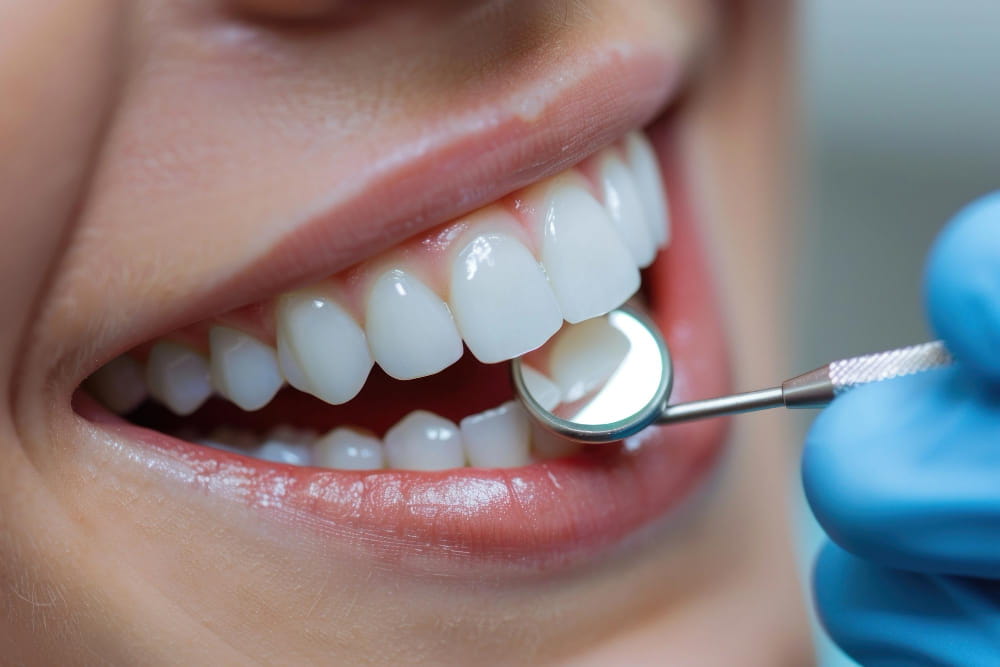
Composite fillings in Antalya are tooth-coloured restorations used to repair cavities, small fractures, worn edges, and minor structural damage while keeping the tooth looking natural. Unlike old-style silver fillings, composite resin can be matched to the surrounding tooth shade, which makes it a preferred option for both front and back teeth when aesthetics matter. The material bonds directly to the tooth structure, allowing us to restore function without removing more healthy enamel and dentin than necessary.
In daily dentistry, composite fillings are one of the most common treatments because they solve a practical problem in a conservative way. A cavity does not stay the same size. Once decay reaches dentin, it can spread faster because dentin is softer than enamel. Treating it early with a composite filling helps protect the remaining tooth structure and reduces the risk of needing root canal treatment later.
Antalya is a preferred destination for composite fillings because patients can receive modern restorative dentistry, shade-matched materials, careful cavity cleaning, and affordable treatment planning in a short appointment schedule. Many patients visiting Antalya for cosmetic dentistry also choose to replace dark, worn, or leaking fillings with tooth-coloured composite restorations for a cleaner smile.
A good composite filling should not only look smooth and natural. It should fit tightly, restore proper bite contact, protect the tooth from bacteria, and allow comfortable chewing. The difference between an average filling and a well-done filling is often visible years later. Margins, polishing, moisture control, and bite adjustment all matter. A filling is small, but the details are not.
Composite fillings are dental restorations made from tooth-coloured resin material used to repair cavities, chipped teeth, worn areas, and small cosmetic defects. The material is a mixture of resin matrix and fine glass or ceramic particles, giving it both aesthetic and functional strength. Because it can be matched to the natural tooth shade, composite is widely used in visible areas and increasingly preferred for back teeth as well.
The main purpose of a composite filling is to replace damaged or decayed tooth structure. During treatment, the decayed part of the tooth is removed, the area is cleaned, and the composite material is placed in layers. Each layer is hardened with a special curing light. This layered technique helps improve strength, reduce shrinkage stress, and shape the filling more accurately.
Composite fillings bond directly to enamel and dentin with adhesive systems. This bonding ability allows a more conservative preparation compared with materials that require mechanical retention. In simple terms, we usually do not need to cut extra healthy tooth structure just to hold the filling in place. That is one reason composite is valued in minimally invasive dentistry.
Composite can be used for small to medium cavities, minor tooth reshaping, replacing old fillings, repairing chipped front teeth, closing tiny gaps, and restoring worn biting surfaces. For very large cavities or teeth with heavy structural loss, an inlay, onlay, crown, or root canal-supported restoration may be more suitable. A filling works best when enough natural tooth remains to support chewing forces.
A properly placed composite filling should blend with the tooth, feel smooth to the tongue, and allow normal biting. If the bite feels high after treatment, a small adjustment may be needed. Even a fraction of a millimetre can feel noticeable when chewing.
Composite fillings offer several advantages for patients who want a natural-looking and conservative dental repair. The most visible benefit is aesthetics. Composite resin can be matched to the tooth’s shade, translucency, and surface character, so the restoration blends with the surrounding enamel. This is very useful for front teeth, premolars, and any area visible when speaking or smiling.
Another important benefit is bonding. Composite adheres to tooth structure using modern adhesive systems. This allows us to preserve more healthy enamel and dentin during preparation. When a cavity is small, we can often remove only the decayed tissue and restore the tooth without creating a larger shape for retention. In dentistry, saving tooth structure is always valuable because natural enamel does not grow back.
Composite fillings are also repairable. If a small chip or stain appears later, the area can often be polished or repaired without replacing the entire restoration. This depends on the size, location, and condition of the filling. The material is versatile enough for both medical and cosmetic uses, from treating decay to improving small chips or uneven edges.
Patients often prefer composite because it contains no mercury and does not create a dark metallic appearance. It also conducts temperature changes less than metal fillings, which may help some patients feel more comfortable with hot and cold foods. The treatment is usually completed in one visit, and the tooth can be used shortly after the filling is hardened.
The real benefit comes from correct technique. A composite filling needs dry working conditions, careful layering, proper curing time, smooth margins, and bite adjustment. When these steps are respected, the result can be strong, attractive, and comfortable for everyday chewing.
A good candidate for composite fillings is someone who has small to moderate tooth decay, chipped enamel, worn edges, old leaking fillings, minor cosmetic defects, or visible dark fillings they want to replace. Composite is suitable for many front and back teeth, especially when there is enough healthy tooth structure left to support the restoration. If the cavity is too large or the tooth is cracked deeply, a different treatment may be safer.
Patients with early cavities often benefit from composite fillings because the treatment can be conservative. Once decay passes through enamel into dentin, a filling is usually needed to stop the damage from spreading. Waiting too long can allow bacteria to reach the nerve, which may lead to severe pain, infection, or root canal treatment. Small cavities are easier to restore, usually require less drilling, and often have better long-term outcomes.
Composite is also a good option for patients who care about appearance. Tooth-coloured fillings are useful for visible areas where a silver filling would stand out. They can also improve the appearance of older restorations that have become stained, rough, or poorly matched to the tooth.
Not every patient is ideal for composite in every situation. People with very large cavities, heavy grinding habits, fractured cusps, poor oral hygiene, or high decay risk may need stronger restorations such as ceramic inlays, onlays, or crowns. If the tooth has pain that lingers after cold or hot drinks, spontaneous pain, or swelling, the nerve may already be affected. In that case, a simple filling may not be enough.
A good candidate also needs healthy gums and a mouth that can be kept dry during treatment. Moisture control is important for bonding. If saliva or bleeding contaminates the surface during placement, the filling may not bond properly. This is one reason careful clinical technique matters as much as material choice.
The composite filling procedure begins with examination and diagnosis. We check the tooth visually, test sensitivity if needed, and use X-rays when decay may be hidden between teeth or under old fillings. Not every cavity is visible from the outside. A tooth can look almost normal while decay spreads underneath the enamel, especially between molars.
Local anaesthesia may be used if the cavity is deep or the patient is sensitive. For very small repairs, anaesthesia may not be necessary. Once the tooth is comfortable, the decayed or damaged tissue is removed with precise instruments. The aim is to clean the cavity thoroughly while preserving as much healthy tooth structure as possible. If an old filling is being replaced, we remove the defective restoration and check for decay underneath.
The tooth is then prepared for bonding. The surface is cleaned, conditioned, and treated with adhesive material. Moisture control is very important at this stage. Cotton rolls, suction, or a rubber dam may be used to keep the area dry. Composite resin is placed in small layers rather than one thick mass. Each layer is shaped and hardened with a blue curing light. Layering helps reduce shrinkage stress and allows better control of the final tooth shape.
After the cavity is filled, the restoration is sculpted to match the tooth anatomy. Back teeth need grooves and contact points that support chewing. Front teeth need smooth contours, correct edge shape, and shade blending. The bite is checked with marking paper. If the filling is even slightly high, it can feel uncomfortable when chewing, so we adjust it until the tooth contacts naturally.
The final step is polishing. A smooth surface collects less plaque, feels better to the tongue, and resists staining better. A well-polished composite filling should feel like part of the tooth, not a patch sitting on top of it.
Composite fillings and amalgam fillings are both used to repair cavities, but they differ in appearance, bonding, tooth preparation, and material behaviour. Composite fillings are tooth-coloured and bond directly to the tooth. Amalgam fillings are silver-coloured metal restorations made from a mixture of metals. For many patients, the most obvious difference is visual. Composite blends with the natural tooth, while amalgam can look dark or grey, especially when used in visible areas.
Composite allows a more conservative preparation in many cases because it bonds to enamel and dentin. This means we can often remove only the decayed part and preserve more healthy tooth structure. Amalgam does not bond in the same way, so the cavity shape may need mechanical features to hold the filling. In some cases, that can mean removing extra tooth structure for retention.
Amalgam has a long history in dentistry and can be durable, especially in areas exposed to heavy chewing forces. Composite materials have improved significantly and are now widely used for back teeth as well. Good isolation, layering, curing, and polishing are essential for composite success. If moisture contaminates the bonding area, composite may fail earlier.
There are also differences in tooth appearance over time. Amalgam can darken the surrounding tooth structure and may create a grey shadow. Composite can stain at the margins if oral hygiene is poor or if the surface is rough, but it can often be polished or repaired. Composite is also mercury-free, which many patients prefer.
The better choice depends on tooth location, cavity size, bite force, aesthetic expectations, and oral hygiene. In modern restorative dentistry, composite is often preferred when we want a natural-looking, conservative repair. For very large restorations or teeth under heavy stress, ceramic onlays or crowns may sometimes be more suitable than either filling material.
Composite fillings can last around 5 to 10 years on average, and sometimes longer, depending on the size of the filling, tooth location, bite force, oral hygiene, diet, and placement technique. Small fillings in low-stress areas often last longer than large fillings on molars exposed to strong chewing pressure. A tiny front tooth repair and a large back tooth filling should not be expected to age in exactly the same way.
The quality of placement has a major effect on longevity. Composite needs proper moisture control, accurate bonding, layered placement, enough curing time, smooth finishing, and bite adjustment. If the filling is placed in a wet field or left too high in the bite, it may chip, leak, or become sensitive. A well-made composite filling should have tight margins where bacteria cannot easily enter.
Patient habits matter just as much. Frequent snacking on sugary foods, acidic drinks, poor flossing, and irregular dental check-ups can lead to decay around the filling. This is called recurrent decay, and it is one of the main reasons fillings need replacement. Grinding or clenching can cause wear, cracks, or fractures. Patients who grind at night may need a night guard to protect both natural teeth and fillings.
Composite may also stain over time, especially in patients who smoke or drink coffee, tea, red wine, or cola frequently. Surface staining can often be improved with polishing. Deep marginal staining or leakage may require repair or replacement.
A filling should be checked during routine dental visits. Pain, floss tearing between teeth, food trapping, rough edges, dark lines around the filling, or sensitivity when biting can signal a problem. Replacing a filling at the right time is far better than waiting until the tooth breaks or the decay reaches the nerve.
Composite fillings cost in Antalya depends on the number of teeth treated, the size and depth of the cavity, tooth location, whether an old filling must be removed, and whether additional treatments are needed. A small one-surface filling is usually less expensive than a larger restoration covering multiple surfaces of a molar. Front tooth aesthetic bonding may also be priced differently because shade matching and shaping require more cosmetic detail.
The condition of the tooth affects the final cost. If decay is shallow and the tooth is otherwise healthy, treatment is usually straightforward. If the cavity is deep, close to the nerve, or hidden under an old restoration, the dentist may need more time and protective materials. If the nerve is infected, a simple composite filling may no longer be enough, and root canal treatment or a crown may be required.
Material quality and clinical technique also influence pricing. High-quality composite systems offer better shade options, polishability, wear resistance, and aesthetics. For visible front teeth, dentists may use several composite shades and translucencies to mimic natural enamel and dentin. This takes more time than filling a small back tooth cavity with one shade.
Antalya is often more affordable than many European countries for restorative dental care because clinic operating costs differ in Turkey. Patients travelling for other treatments such as veneers, crowns, implants, or whitening may choose to have composite fillings completed during the same visit. This can be convenient, but each tooth should still be diagnosed properly.
A clear quotation should explain how many fillings are needed, which teeth are involved, whether X-rays are included, whether old fillings must be removed, and whether any deeper treatment might be necessary. The cheapest filling is not always the best value if it is poorly shaped, rough, or not sealed properly. A good composite filling protects the tooth, not just the budget.
Composite fillings are safe when placed by a dentist using proper materials and clinical technique. Modern dental composites are widely used around the world and are designed to restore teeth while blending with natural enamel. They are mercury-free, tooth-coloured, and bonded directly to the tooth structure. For most patients, the procedure is comfortable and can be completed in one visit.
Pain control depends on cavity depth and tooth sensitivity. For shallow repairs, anaesthesia may not be needed. For deeper cavities or patients who feel anxious, local anaesthesia is used to numb the tooth and surrounding gum. Once the area is numb, the patient should feel pressure or vibration rather than pain. If discomfort appears during treatment, the dentist can adjust anaesthesia before continuing.
After a composite filling, mild sensitivity to cold, pressure, or sweet foods can occur for a few days. This is more common when the cavity was deep or close to the nerve. Sensitivity should gradually improve. If pain becomes stronger, lasts for several minutes after cold drinks, wakes the patient at night, or appears when biting, the tooth should be checked. Sometimes the bite is slightly high and needs adjustment. In deeper cases, the nerve may already have been irritated by decay before treatment.
Composite materials are safe for everyday chewing when used in suitable situations. The key is correct case selection. A very large broken tooth may not be safe with a simple filling because the remaining walls can fracture. In such cases, an onlay or crown may protect the tooth better.
Patients often worry about replacing amalgam fillings with composite. This can be done safely when needed, but old fillings should be removed carefully, and the tooth underneath must be assessed. Replacement is most useful when the amalgam is cracked, leaking, unaesthetic, or causing structural concern.
Aftercare for composite fillings is simple, but it makes a real difference in how long the restoration lasts. Once the filling is hardened with the curing light, it can usually be used shortly after the appointment. If local anaesthesia was used, eating should wait until numbness wears off. Biting the cheek or tongue while numb is easier than people realise, especially after lower jaw anaesthesia.
For the first day, it is wise to avoid very hard or sticky foods if the filling is large. Composite reaches functional hardness immediately, but the tooth and bite may need a short adjustment period. If the filling feels high when biting, do not try to “wear it down” by chewing on it. A high filling can stress the tooth and cause sensitivity. A quick bite adjustment at the clinic usually solves the problem.
Daily cleaning protects the edges of the filling. Brush twice a day with fluoride toothpaste and clean between the teeth with floss or interdental brushes. Decay often starts at the margin where the filling meets the tooth, especially between teeth where brushing cannot reach. If floss catches, tears, or feels blocked around a new filling, the contact area should be checked.
Composite can stain over time. Coffee, tea, tobacco, red wine, and dark sauces may affect the surface, especially if polishing is poor or oral hygiene is inconsistent. Professional polishing can refresh the surface in many cases. Avoid habits such as chewing ice, biting nails, cracking seeds with front teeth, or opening packages with teeth. These habits can chip both fillings and natural enamel.
Routine dental check-ups are recommended every 6 months for many patients. Those with high decay risk, dry mouth, gum disease, or many restorations may need shorter intervals. A small repair today is much easier than treating a fractured tooth later.
Antalya is a practical choice for composite fillings because patients can access modern restorative dentistry, tooth-coloured materials, experienced clinicians, and more accessible prices than in many European countries. Composite fillings are often completed in a single visit, which makes them convenient for both local and international patients. Many people travelling to Antalya for smile design, veneers, crowns, implants, or whitening also have cavities treated or old fillings replaced during the same treatment plan.
The value of treatment in Antalya is not only price. Good clinics use careful diagnosis, X-rays when needed, shade selection, adhesive systems, proper curing lights, and polishing protocols. These details matter because composite fillings depend heavily on technique. A filling that looks acceptable on the day of treatment can still fail early if the bonding was contaminated, the cavity was not cleaned properly, or the bite was left too high.
International patients often appreciate the organised appointment structure. Small fillings can usually be treated quickly, while multiple restorations may be planned across a few appointments. If more complex problems are found, such as deep decay, cracked teeth, or infection, the dentist can explain whether root canal treatment, inlays, onlays, or crowns would be more appropriate.
Antalya also offers a comfortable setting for dental treatment, with easy travel connections, hotels, and clinics experienced in caring for patients from abroad. Convenience should not replace clinical judgement. A patient should still receive a proper examination, clear explanation, and realistic treatment plan.
Composite fillings may seem like a minor dental service, but they protect teeth from further damage and help preserve natural structure. Choosing a clinic that treats them with precision can prevent bigger dental problems later.

With a passion for dental excellence, Şirinyalı Dental Clinic combines the latest technologies with personalised care to give you the smile you deserve.
Çağlayan Mah. Bülent Ecevit Bul. Kardelen Sitesi. B Blok 150/A Muratpaşa / Antalya / Turkey

We use cookies to enhance your browsing experience, serve personalised content, and analyse our traffic. You can choose your preferences below.
When you visit our website, it may store or retrieve information on your browser, mostly in the form of cookies. This information might be about you, your preferences, or your device and is mostly used to make the site work as you expect it to.
These cookies are essential for the website to function and cannot be switched off. They are usually set in response to actions made by you such as setting your privacy preferences, logging in, or filling in forms.
These cookies allow us to count visits and traffic sources so we can measure and improve the performance of our site. They help us to know which pages are the most and least popular.
These cookies enable the website to provide enhanced functionality and personalisation such as live chat, videos, and remembering your language preference.
These cookies may be set through our site by our advertising partners. They may be used to build a profile of your interests and show you relevant adverts on other sites.
Leave your details for a personalized treatment plan.
Our expert team will contact you shortly.

Premium dental treatments in the heart of Antalya — trusted by patients from 50+ countries.
Share your details and our dental specialists will create a personalized treatment plan — completely free.
🔒 Your information is secure and will never be shared.
